Author: admin

  • The Latest on Veterinary Cardiology

    The Latest on Veterinary Cardiology

    How the advances in veterinary cardiology and canine medicine improve heart health for the lives of patients.

    Veterinary medicine has come a long way in recent years, especially in veterinary cardiology, where a large volume of research is underway.

    Researchers and specialists are making strides in interventional cardiology, which uses advanced procedures and imaging techniques to perform minimally invasive therapy with certain cardiac diseases. It can be used to correct abnormal rhythms or close openings in the heart.

    An example of the latter is called patent ductus arteriosus, or PDA. The condition results from failure of the ductus arteriosus to close after birth, resulting in an irregular flow of blood from the aorta to the main pulmonary artery.

    One minimally invasive treatment option utilizes the Amplatz Canine Duct Occulder, a device delivered via the vasculature by a catheter to the site of the PDA.

    Thaibinh Nguyenba, DVM, Dipl. ACVIM (cardiology), of MedVet Medical and Cancer Centers for Pets in Columbus, Ohio, was one of the technique’s lead researchers. He calls the Amplatz Canine Duct Occulder, or ACDO, a significant advancement in veterinary interventional cardiology.

    “[It] infuses novel biotechnology into a cardiovascular device designed specifically for dogs,” Dr. Nguyenba said. “With this device and procedure, patent ductus arteriosus occlusion success rates in dogs match those seen in similar procedures for people with the same disease.

    “Within a decade of its development, this minimally invasive procedure has become the treatment of choice for correcting patent ductus arteriosus in dogs,” he added.
    >> READ FULL ARTICLE

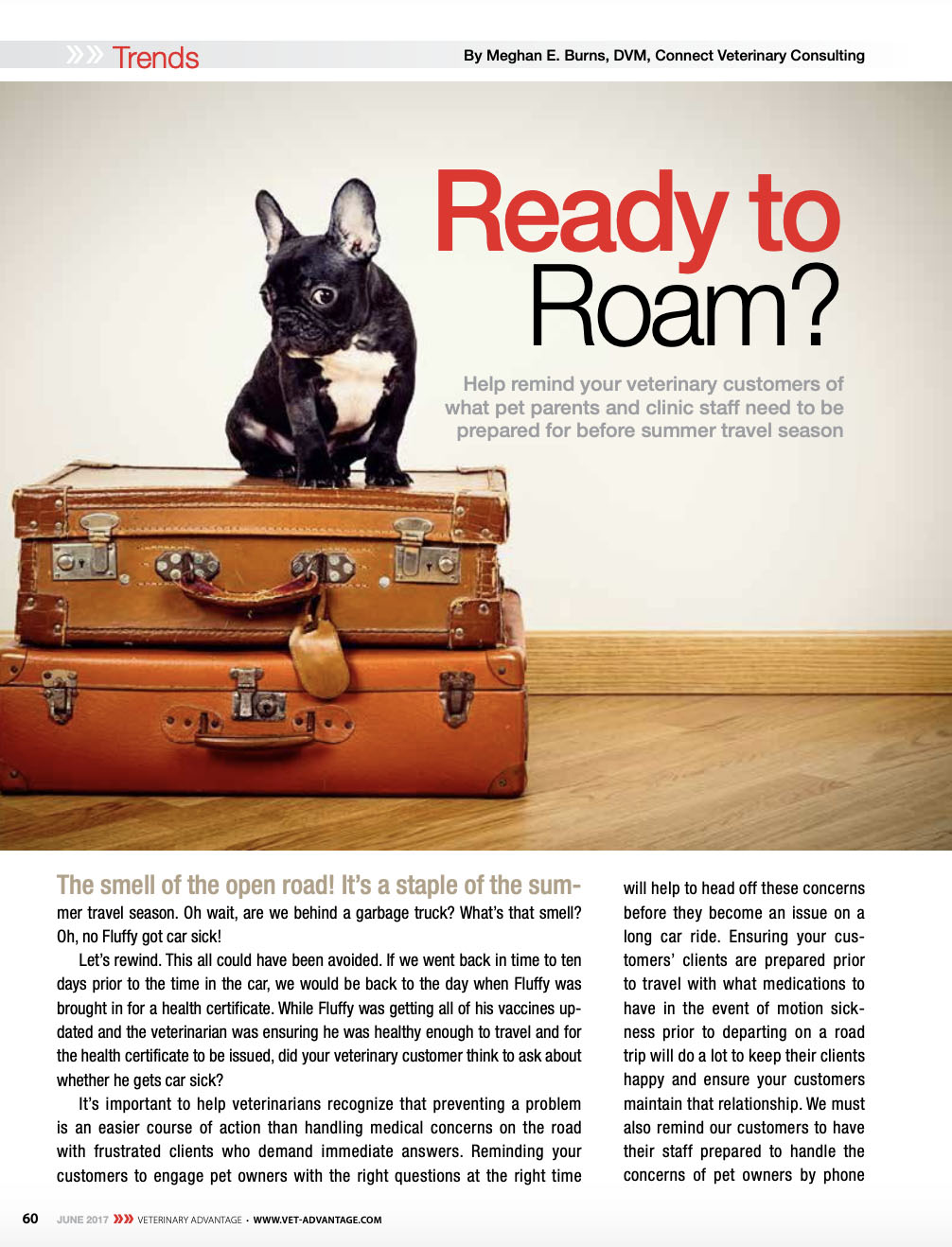
  • Pet Travel Basics: Ready to Roam?

    Pet Travel Basics: Ready to Roam?

    Help remind your veterinary customers of what pet parents and clinic staff need to be prepared for when it comes to pet travel before the summer season.

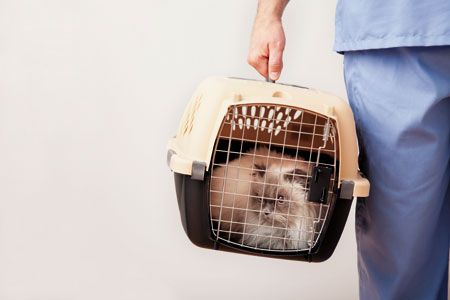
    The smell of the open road! It’s a staple of the summer travel season. Oh wait, are we behind a garbage truck? What’s that smell? Oh no, Fluffy got car sick!

    Let’s rewind. This all could have been avoided. If we went back in time to ten days prior to the time in the car, we would be back to the day when Fluffy was brought in for a health certificate. While Fluffy was getting all of his vaccines updated and the veterinarian was ensuring he was healthy enough to travel and for the health certificate to be issued, did your veterinary customer think to ask about whether he gets car sick?

    It’s important to help veterinarians recognize that preventing a problem is an easier course of action than handling medical concerns on the road with frustrated clients who demand immediate answers. Reminding your customers to engage pet owners with the right questions at the right time will help to head off these concerns before they become an issue on a

    long car ride. Ensuring your customers’ clients are prepared prior to travel with what medications to have in the event of motion sickness prior to departing on a road trip will do a lot to keep their clients happy and ensure your customers

    maintain that relationship. We must also remind our customers to have their staff prepared to handle the concerns of pet owners by phone when unexpected travel issues arise. Providing empathy, genuine concern, and solutions to your customers’ most valuable clients over the phone will go a long way to enhancing the veterinarian-client relationship.

    >> READ FULL ARTICLE

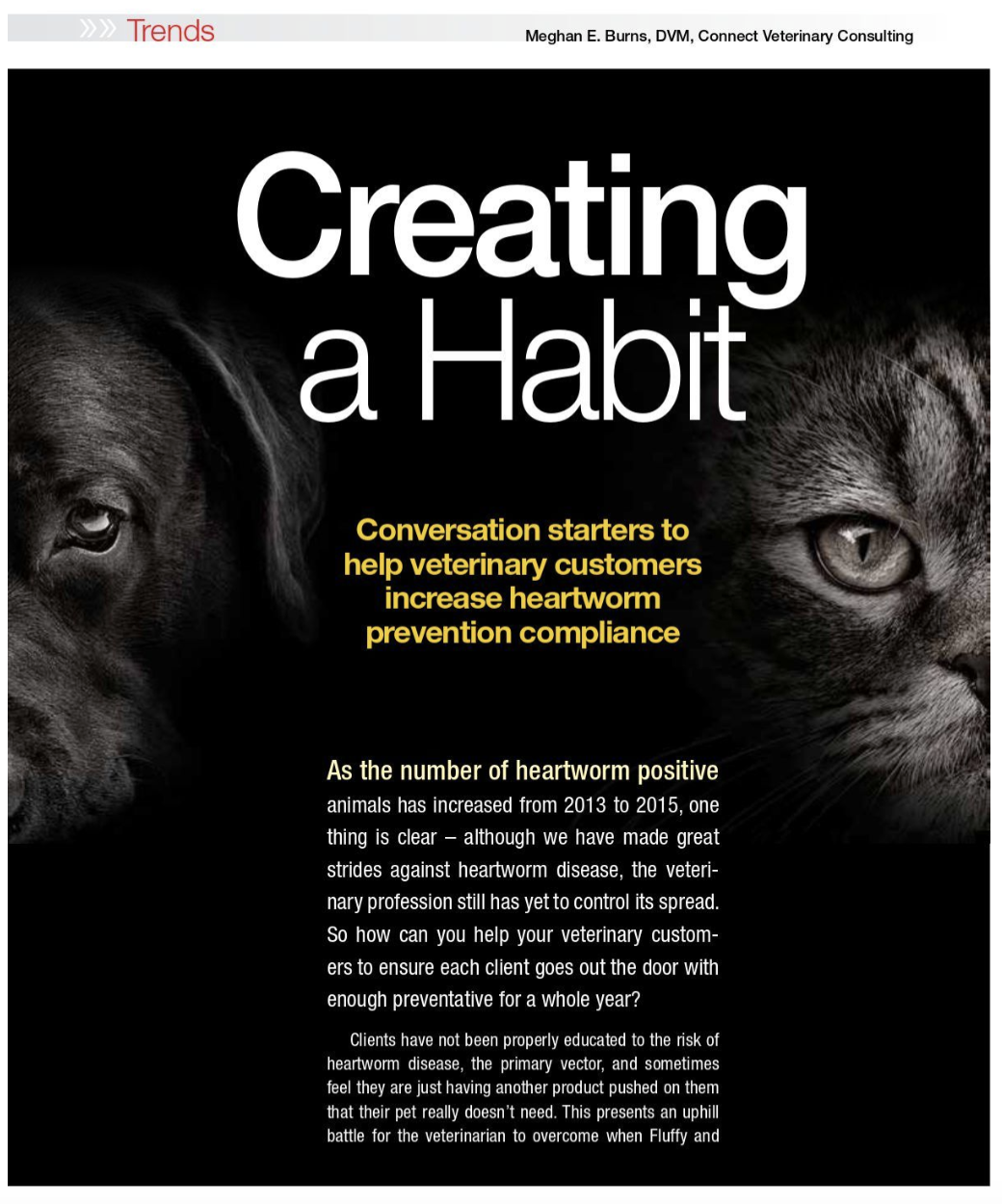
  • Heartworm Prevention: Creating a Habit

    Heartworm Prevention: Creating a Habit

    Learn more about conversation starters to help veterinary customers increase heartworm prevention compliance.

    As the number of heartworm positive animals has increased from 2013 to 2015, one thing is clear – although we have made great strides in heartworm prevention, the veterinary profession still has yet to control its spread.

    So how can you help your veterinary customers ensure each client goes out the door with enough preventative for a whole year?

    Clients have not been properly educated to the risk of heartworm disease, and sometimes feel they are just having another product pushed on them that their pet really doesn’t need. This presents an uphill battle for the veterinarian to overcome when Fluffy and Fido visit for their yearly check-up and vaccine appointment. You as a sales representative can remind the veterinarian on how to start the conversation:

    “Heartworms are a real danger and are a serious threat to both dog and cat health. This can be revealed by reviewing the lifecycle with the pet owner,” and then explain:

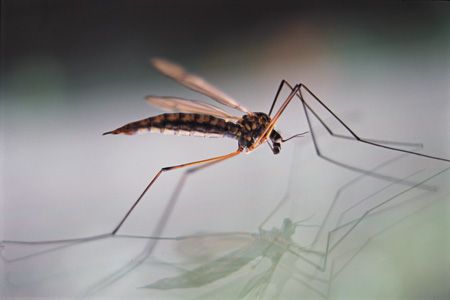
    • Heartworms are transmitted by mosquitoes.
    • Infected mosquitoes can come inside the home, both outdoor and indoor pets are at risk. 
    • Mosquitos become infected with microfilariae while taking a blood meal from an infected animal.
    • When the mosquito bites an animal, the infective larvae are discharged onto the surface of the animal’s skin. After the mosquito withdraws its proboscis, the infective larvae enter the animal through the bite wound.
    • Once inside a new host, it takes approximately 6 months for the larvae to mature into adult heartworms. Once mature, heartworms can live for 5 to 7 years in dogs and up to 2 or 3 years in cats. Because of the longevity of these worms, each heartworm positive pet becomes a reservoir for microfilariae to infect other pets.

    >> READ FULL ARTICLE

  • Becoming a Fear Free Practice

    The Fear Free program isn’t a tagline, but a toolbox.

    What if I told you and your veterinary customers that
    utilizing one program would allow you to increase client visits, decrease patient and client stress, decrease the potential for vet clinic staff injuries, and potentially decrease one of the most frequent causes of staff burnout? Is your first reaction, yeah right? Or show me how?

    Becoming a Fear-Free certified practice does all those things, and more.

    Veterinarians and vet nurses are an integral part to the human-animal bond. Not picking up on behavioral signs of fear erodes the joy of veterinary medicine when­ever conflict develops with patients and increases the potential for injuries. Ultimately, any and all of this puts the human-animal bond in jeopardy. Ultimately any and all of this puts the human-animal bond in jeopardy. Sixty-seven percent of licensed clinical veterinarians and 98% of veterinary nurses experience an animal-related injury at some point in their careers.[1] The reported methods of these injuries include bites, kicks, scratches, and being crushed by equipment used for animal restraint.[1] 

    Whenever possible, patient preparation before visits will help to prevent anxiety from accumulating and help alleviate stress upon arrival at the hospital.[2] The majority of cat owners report the perception of stress for their cats is the primary reason they fail to seek veterinary care.[3] A recent study shows the use of high-dose gabapentin is a safe and effective treatment for cats to help reduce stress and aggression and increase compliance for transportation and veterinary examination.[4] Appropriate use of sedation and analgesia is just one component of the Fear-FreeTMtoolbox.

    >> READ FULL ARTICLE


    [1] Nienhaus A, Skudlik C, Seidler A. Work-related accidents and occupational diseases in veterinarians and their staff. Int Arch Occup Environ Health. 2005;78:230–238.

    [2] Yin, S. Low Stress Handling, Restraint and Behavior Modification of Dogs and Cats: Techniques for Patients Who Love Their Visits; CattleDog Publishing: Davis, CA, USA, 2009.

    [3] van Haaften KA, Forsythe LRE, Stelow EA, Bain MJ. Effects of a single preappointment dose of gabapentin on signs of stress in cats during transportation and veterinary examination. J. Am. Vet. Med. Assoc. 2017 Nov 15;251(10):1175-1181.

    [4] Pankratz KE, Ferris KK, Griffith EH, Sherman BL. Use of single- dose oral gabapentin to attenuate fear responses in cage-trap confined community cats: a double-blind, placebo-controlled field trial. J Feline Med Surg. 2017. 

  • Repair the Barrier, Not Rinse and Repeat

    Using proactive therapy, help your veterinary customers with owners who aren’t compliant with shampooing as often as prescribed.

    It’s all well and good when the medicine your veterinary customers prescribe does the trick the first time around. But, when owners are not compliant with treatment instructions, skin infections don’t respond to antibiotic therapy due to underlying disease, or the ear infection recurs resulting in angry owners and a dog that is still potentially in need of further diagnostics as well as treatment. What if this could all be avoided be­fore this cycle starts?

    Proactive therapy can often be the best medicine. Here’s how it works.

    Your customers already know that atopic dermatitis (AD):

    • Affects 10 to 15 percent of the canine population
    • Itchy skin is the most common clinical sign
    • Along with redness on the face, paws, ears, and inguinal areas
    • Clinical signs in most cases are triggered by:
      • dust mites
      • pollen
      • flea/insect bites
      • food allergies

    >>READ FULL ARTICLE

  • Brush Up Your Dental Care Message for Stronger Customer Engagement

    Brush Up Your Dental Care Message for Stronger Customer Engagement

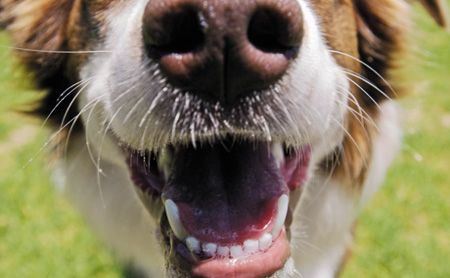
    Clients get the most knowledgeable advice about dental care from veterinary teams, and purchasing (and re-purchasing) dental products from you helps pet owners to successfully maximize their pets’ dental health. Here’s how to stay top of mind.

    In a recent study commissioned by Virbac Corporation, about half of pet owners surveyed reported that their veterinarian sells dental care products. However, these customers purchased only 14% of their dental products at the veterinary clinic and 74% of dental health products at retail outlets.

    Addressing this apparent discrepancy in consumer behavior could represent a significant revenue gain for your clinic. Get started with these three steps:

    1. Highlight the differences. Eighty-seven percent of respondents stated that veterinarian recommendations had the most influence on their purchase of dental hygiene products. Use that influence to highlight the differences between the dental products you stock and grocery store brands and explain why these products are better at helping to remove plaque and reduce tartar. Emphasize the need for ongoing home dental care, and actively prescribe the products you recommend.

    2. Focus on engaged pet owners. Pet owners that bring their dog to the clinic three or more times per year could arguably be identified as more engaged pet owners. Yet even this core group of clients buys 71% of their dental products outside the clinic. These clients are likely the most receptive to your advice since they already value your services and your expertise, so consider focusing your educational efforts and outreach to target them.

    3. Make it easy to buy from you. About 50% of pet owners surveyed purchased dental products online. Consider partnering with a service to build an online pharmacy and offer these clients the option to re-order dental products online with you. Online pharmacy and home delivery service options can be supported by client communications that improve compliance, grow practice revenues, and simplify inventory management.

    >> READ FULL ARTICLE

  • Oh My, Myopathy!?!

    Oh My, Myopathy!?!

    Your heart sinks when a veterinary patient comes into your clinic with signs that could be related to dilated cardiomyopathy. This is how to confirm that is what you are dealing with and some breed-specific factors that may come in to play.

    Doberman pinschers are often considered the poster child for DCM. We are all familiar with the pathophysiology-myocardial disease results in a progressive decrease in myocardial contractility and ventricular dilation. The cause in many cases has not been determined and is, thus, considered to be idiopathic.

    In a presentation on dilated cardiomyopathy (DCM) at the CVC in San Diego, Barret Bulmer, DVM, MS, DACVIM (cardiology), said that although the likely cause of this form of cardiomyopathy is genetically mediated, there are some conditions that will produce a secondary form of cardiomyopathy that must be ruled out before you can diagnose DCM. And you must differentiate other cardiac diseases that can manifest similar clinical signs. This article reviews the current diagnostic tests for confirming the disease and shares breed differences that may influence your clinical outcome.

    Deliberate on those differentials

    Since DCM is a diagnosis of exclusion, Dr. Bulmer says you must rule out the following conditions:

    • Heartworm disease

    • Pericardial disease

    • Degenerative valvular disease

    • Hypothyroidism

    • Taurine insufficiency

    • Doxorubicin toxicosis

    • Primary arrhythmia (e.g. persistent supraventricular tachycardia) or congenital conduction abnormality (accessory pathway) that contributes to a DCM-like state

    >> READ FULL ARTICLE

  • Can a Single Ingredient Stop Heartworm Disease Transmission in its Tracks?

    Can a Single Ingredient Stop Heartworm Disease Transmission in its Tracks?

    A new study investigates whether repelling mosquitoes may make a difference in the heartworm disease transmission cycle.

    Did you know that a flea preventive you have already been recommending for your veterinary patients may provide an extra level of protection from heartworm disease you weren’t even aware of?

    At an industry session sponsored by Ceva Animal Health at the Western Veterinary Conference in March, John McCall, MS, PhD, discussed the findings of his recent study funded in part by Ceva, offering a new perspective on heartworm disease transmission and its primary vector.

    As the incidence of heartworm disease has increased from 2013 to 2015 and the geographical distribution has expanded, one thing is clear-heartworm disease is still prevalent. And although we have made great strides against it, the veterinary profession still has yet to control its spread.

    The objective of Dr. McCall’s study was to answer the question: Does mosquito repellency help in the prevention of heartworm disease transmission?

    What to say to clients

    If you routinely receive the same objections to topical ectoparasiticide treatment from clients, here are some talking points to help:

    • Year-round heartworm prevention is still the primary recommendation from the American Heartworm Association.
    • Repellency in various topical ectoparasitic products now provides you an additional argument for why flea, tick and biting insect monthly preventive treatment is warranted.
    • When owners question the safety of the product, remind them that permethrin-impregnated bed nets and clothing on humans have been used for decades in malaria-endemic areas to reduce disease transmission.

    >> READ FULL ARTICLE

  • Trigger Warning: Recognizing Feline Anorexia

    Trigger Warning: Recognizing Feline Anorexia

    9 tips to help cats in your veterinary clinic have less stress and more appetite to avoid feline anorexia.

    Whether a cat presents to your clinic with anorexia or develops it during hospitalization, you can take steps to manage each case while the cat is in your care. According to Susan Little, DVM, DABVP (feline), during a presentation at the WVC Annual Conference, the first step is to understand what female anorexia is (and isn’t) and how it’s triggered.

    Don’t miss these stress signals

    Make note of the following information daily since many of these factors could indicate a stressed kitty (e.g. for muscle conditioning scoring, cats can lose muscle mass quickly and easily when sick or when their nutrition is inappropriate):

    • Temperature
    • Pulse rate
    • Respiratory rate
    • Body weight
    • Body condition score
    • Muscle condition score
    • Amount of food actually eaten
    • Amount of water consumed
    • Estimate of urine quantity
    • Fecal quantity and score
    • Vomiting evidence

    >> READ FULL ARTICLE

  • Taking the Bite Out of Tooth Extraction

    Taking the Bite Out of Tooth Extraction

    The old string around the tooth trick won’t work with your veterinary patients. But here are some tips to help you slam the door on your fears of tooth extraction.

    Let’s be honest, extracting teeth does not send too many veterinarians in general practice leaping for joy. However, these practical tips from a presentation on dental extractions at CVC Virginia Beach by Matthew Lemmons, DVM, DAVDC, a veterinary dentist at MedVet Indianapolis, may take away some of your trepidation when excavating the oral cavity.

    An oral overview

    The indications for dental extraction are:

    • Periodontal disease
    • Fractured teeth
    • Tooth resorption
    • Treatment of malocclusion

    Although the oral epithelium is very forgiving compared with other tissues, Dr. Lemmon says to go into a dental extraction with the following goals in mind:

    • Remove all dental tissue, including all of the tooth root.
    • Cause as little trauma as possible.
    • Be sure to be easy with soft tissue handling.
    • Oppose soft tissue tension-free so it heals quickly.

    >> READ FULL ARTICLE