Author: admin

  • Artificial Intelligence in Veterinary Medicine

    Artificial Intelligence in Veterinary Medicine

    Whether you regard artificial intelligence (AI) as an existential threat to humanity or the foundation of a Brave New World of limitless progress and prosperity, there’s no doubt it’s here to stay. And despite recent bipartisan calls to regulate its development and applications, there’s a good chance it won’t be restrained for very long. 

    What does that mean for veterinarians? Should you worry that virtual veterinarian chatbots in the service of giant internet entities could soon replace you? Probably not. While AI programs capable of using and understanding everyday natural language already exist, in the near term these would likely be used to dispense the kind of advice already available to pet parents in print form on countless websites (Does my dog have arthritis? Why is my cat’s breath terrible?).  For veterinarians the technology may in fact be an opportunity to practice ultimate best medicine with the help of an electronic consultant of unfathomable knowledge and experience.

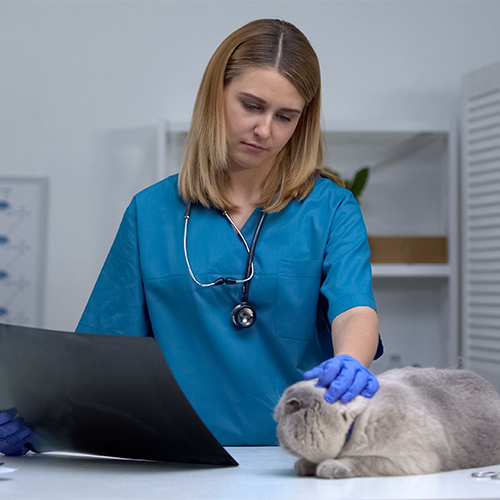
    But that won’t be the end of it. AI is already making inroads in radiology. Currently there are not enough radiologists to read the countless radiographs taken daily in general practice, which can result in delayed diagnoses and treatment. While AI hasn’t advanced far enough to take over the radiologist’s role (at least not yet) it’s already being used make the process of interpreting scans and films more efficient. AI programs trained on many thousands of radiographs and the interpretations associated with each can use these data to make diagnoses of their own when shown radiographs to which they had not previously been exposed. Exactly how AI comes to its diagnostic conclusions isn’t always obvious (indeed, the machine’s thought processes can be downright mysterious) but its findings are sufficiently accurate to serve as a first pass review to help speed the radiologist’s work. 

    AI’s technology has only scratched the surface on predicting diseases. AI algorithms can analyze data from electronic health records, including medical history, breed, age, and environmental factors, to predict the likelihood of an animal developing a particular disease. Many diseases have vague clinical signs and may go undetected for years. This includes Addison’s disease also called the “Great Pretender” because its signs that mimic those kidney and intestinal disease. Drs. Krystle Reagan, DVM, PhD, DACVIM (SAIM) and Chen Gilor, DVM, PhD, DACVIM (SAIM) teamed up with an electrical and computer engineer at UC Davis to develop an AI algorithm to diagnose Addison’s disease with an accuracy rate greater than 99 percent. The algorithm was based on bloodwork for more than 1,000 dogs previously treated at UC Davis.  

    For oncologists and internal medicine veterinarians, diagnosis is not the ultimate goal. Personalized medicine and treatment options are the focus. AI is currently being used to develop custom treatment plans by analyzing an animal’s medical history, genetics, and other factors to recommend the most effective care.  For example, Dr. Reagan’s research has shown that AI can help determine whether dialysis should be used as part of the treatment protocol for dogs diagnosed with leptospirosis.

    How will veterinary medicine be influenced by AI in the future?  ChatGBT can mimic speech surprisingly well today. AI in the future may be a sort of backup system to veterinarians in which telemedicine visits now can be triaged by an AI bot that determines a diagnosis and treatment plan and signed off by a human veterinarian thousands of miles away. You think we have Veterinary Client Patient Relationship (VCPR) issues now with telemedicine?

    Artificial Intelligence, however, is not without its faults. When someone tells an untruth, we call it lying. When AI does it, it’s a hallucination. Part of the issue here is that we don’t completely understand how AI does what it does. Its database is the public domain so how (or why) can it make up fake Kings or history that never occurred? When while we are waiting for that answer, there are ways to limit the hallucinations. One of the easiest ways is limiting possible outcomes by specifying the response you want i.e., giving the AI bumpers in bowling.

    AI has vast implications in veterinary medicine. AI can facilitate more comprehensive results in a shorter amount of time. Leveraging technology can also help the health of your practice too. Allowing technology to do what it is capable of allows you to diagnose disease earlier, make better treatment decisions, improve pet owner communication, and make that pet parent a client of your practice for their lifetime. Better science leads to better decisions, and better business. At least, it always has.

  • Connect Veterinary Awarded WBE

    Connect Veterinary Awarded WBE

    Certification Allows Connect Veterinary Consulting Extended Reach in Missouri

    Kansas City, Missouri (March 13, 2023). Connect Veterinary Consulting, a Woman-Owned business announces being awarded Women-Owned Business Enterprise (WBE) by the State of Missouri. Connect Veterinary Consulting connects animal health and marketing.

    “Our staff is excited about this certification – especially during Women’s History Month,” commented Connect Veterinary Consulting (Connect VC) President Dr. Meghan Burns, DVM. “As a woman-owned business, we appreciate this recognition and look to support other female entrepreneurs in our communities, industries we serve, and nationally,” continued Dr. Burns.

    Connect VC services include creating marketing strategy, conducting market research and analysis, business development, and rich-content creation for the veterinary industry. Clients in the veterinary marketplace include pharmaceutical, food, device, and diagnostic companies, veterinary hospitals and clinics, veterinary specialists, and general practitioners.

  • Connect Veterinary Consulting Announces Expansion

    Connect Veterinary Consulting Announces Expansion

    New Expansion Will Enable Companies in the Veterinary Marketplace to Acquire New Clients and Drive Revenues

    Kansas City, Missouri (January 2, 2023). Connect Veterinary Consulting, a Woman-Owned business, announced an expansion of services that will help companies in the Veterinary Marketplace drive revenues and acquire new clients.

    “Our staff is excited about the expansion of services we can deliver to the Animal Health Industry,” commented Connect Veterinary Consulting (Connect VC) President Dr. Meghan Burns, DVM. “As a woman-owned company, Connect VC offers expert fractional Chief Veterinary Officer and marketing services that elevate a company’s marketing strategy, accelerate growth and profitability, overcome challenges, and position companies in our market to succeed,” continued Dr. Burns.

  • Translating a Technical Message

    Translating a Technical Message

    meghan-e-burns-dvm
    Dr. Meghan E. Burns

    When translating a technical message, Connect Veterinary Consulting President, Dr. Meghan Burns, DVM relies on her education and industry experience to hit the mark. Her mission is simple: connect her customers with their target audience, colleagues, and industry partners in a way that is clear, credible, and compelling.

    In veterinary medicine and animal health, the message matters. Products, services, and innovations often come with complex science, technical data, regulatory considerations, and clinical nuance. But if that information is not translated in a way the audience understands, it can fall flat.

    Dr. Burns states, “It comes down to what works best for your brand, what you are trying to convey, and your advertising and promotion budget.” No matter the audience it’s really all about finding that “magic in a product”.

    In a sense, it’s about interrogating products (as some may say in marketing) until they confess their strengths. From there, those strengths must be translated for different audiences, whether that is veterinarians, pet owners, sales teams, investors, distributors, or industry partners.

    That translation is where strategy meets science.

    A strong technical message should do more than explain what a product does. It should help the audience understand why it matters, how it fits into their world, and what makes it valuable. That requires both scientific credibility and marketing clarity.

    This is the central philosophy behind Connect Veterinary Consulting and what Dr. Burns is so passionate about: helping animal health companies communicate with confidence, relevance, and purpose.

    To learn about this topic further, listen to how Dr. Burns applied her education to the business of veterinary medicine and accomplished success on her podcast below!

    Ready to take the next step with your marketing or business development? Connect Veterinary Consulting is here to help. Get the conversation started today with a free consult.

    Stay in the Know – From business development to marketing, our vet marketing blog covers a gamut of pressing questions many business owners ask themselves. 

    Source: BioKansas Expert Insight Series

  • Pushing Past the 4D’s of Vet Med – Debt, Death, Demeaning Owners & Depression

    Pushing Past the 4D’s of Vet Med – Debt, Death, Demeaning Owners & Depression

    Too many stories today lack compassion. The world is frustrated, burnt out, too busy, too tired, too selfish to care. When you hear stories of veterinarians being berated by owners who had to wait 25 minutes to be seen because the doctor was too busy triaging a critical patient, you have to wonder what the world has come to.

    Veterinarians have not been taught how to handle interactions with owners that start out like this and emerge from them calm and intact. That’s a critical gap because they face the 4D’s every day – debt, unnecessary death, demeaning owners, and often depression. Top that off with threats of cyberbullying and the demands of trying to keep a business afloat and pressure can be overwhelming.

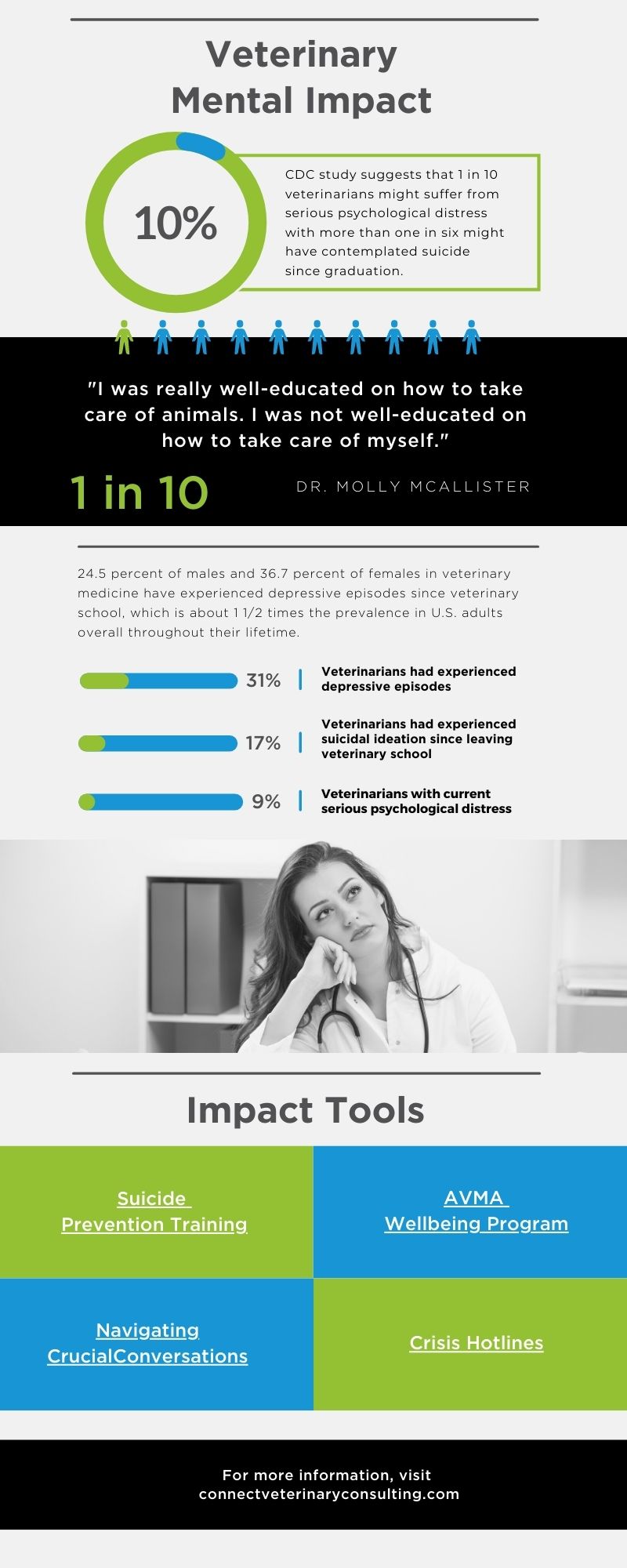
    A 2014 CDC study that surveyed more than 11,000 U.S. veterinarians in 2014 found that 9% had current serious psychological distress, 31% had experienced depressive episodes, and 17% had experienced suicidal ideation since leaving veterinary school.

    Having a greater online presence going into 2021 is expected, especially since the pandemic made it a non-option. Even more than that, though, patients expect a seamless digital experience. That means a functioning and well-run website, easily accessible online tools, and connecting patients to your practice digitally.

    It’s the last finding that is most disturbing – that more than one in six veterinarians has contemplated suicide since graduation. While experts debate the reasons that account for it-from the innate personality traits of those attracted to the profession, to the relentless demands placed on women practitioners — one thing is true: even one is too many.

     A powerful truism many veterinarians may never consider could potentially save lives or at least spare professional anguish: You can fire clients. Abuse is abuse. We don’t tolerate it in our daily business dealings or from the people we employ. And we needn’t tolerate abuse from our clients.  When disrespect, anger, and entitlement exact an emotional toll on you and your staff that cannot be endured, the relationship is over.  

    So how do we equip practicing and prospective veterinarians with skills to better care for themselves?  Groups such as “Not One More Vet” which currently has over 26 thousand members provide a safe space for veterinarians to gain support from colleagues for many of the profession’s challenges.

    Veterinary schools need to better prepare students for the emotional toll of euthanasia. The psychological toll of being “Dr. Death” is enormous and can leave veterinarians feeling isolated with no time to grieve or process the loss appropriately. Alternative solutions to euthanizing healthy animals must be developed. These include building a network of fosters and local shelters to which owners may surrender healthy animals.

    It is also time for companies in the animal health space to sponsor actionable programs to help veterinarians deal with the psychological stress that arises from running a business… Veterinarians need to understand price structure, competitive analysis, market tolerance, basic marketing, and financial skills to meet the daily challenges of practice.

    Download the infographic to learn more about current statistics and get valuable resources veterinarians and their staff can use to assist in these efforts.

    Click to Download (PDF)

    Help others in need by spreading the message and sharing it with your networks on social, #NOMV.

    If you or someone you know is in crisis:

    Connect with a Partner Who Knows the Industry

    After a challenging year, the value of having a partner who understands both the veterinary industry and how to help businesses flourish is even more valuable. For a business and marketing strategist who is deep-rooted in the medical industry, look no further than Connect Veterinary Consulting.

    Ready to take the next step with your marketing? We’re here to help. Get the conversation started today with a free consult.

  • Connecting & Serving Others with Excellence

    Connecting & Serving Others with Excellence

    meghan-e-burns-dvm
    Dr. Meghan E. Burns

    When it comes to connecting people, Connect Veterinary Consulting CEO Dr. Meghan Burns takes the task to heart. She operates with the mission of connecting her customers with their target audience, colleagues, and industry partners. In tandem with that mission, her goal is to provide more than just a quality service but excellence within her service!

    Dr. Burns knows that relationships and genuine interest in serving others are what build long-term success in any industry. In contrast, marketers can sometimes get stuck in the rut of counting views and impressions without paying enough attention to connection opportunities. Because meaningful connections come from serving others, an organization’s level of sincere service can affect its partnerships, client relationships, and more. This is the central philosophy behind Connect Veterinary Consulting.

    To learn about this topic further, listen to how Dr. Burns applied this principle of excellence to her veterinary business and accomplished success on her podcast below!

    Ready to take the next step with your marketing or business development? Connect Veterinary Consulting is here to help. Get the conversation started today with a free consult.

    Stay in the Know – From business development to marketing, our vet marketing blog covers a gamut of pressing questions many business owners ask themselves. 

    Source: Backroad Productions

  • 2022 Marketing Trends: How Veterinary Practices Bring on the New Year

    2022 Marketing Trends: How Veterinary Practices Bring on the New Year

    Yes, 2020 and 2021 have been rough for veterinary practices—let’s face it, for everyone—but that doesn’t mean 2022 has to be about disruption and uncertainty, too. No matter what 2021 looked like for you, preparing for 2022 marketing trends will be critical in bouncing back and thriving.

    And don’t feel like you have to go this alone. Connect Veterinary Consulting has the business experience to help you take on the new year with confidence. We’ve even created a free New Year’s Resolutions guide with tips and space to organize goals for your veterinary business based on the 2022 marketing trends.

    The Patient Digital Experience

    “Pivoting online is no longer just a good idea—it’s quite literally essential.”

    Jeremy Moser, marketing expert and co-founder of uSERP

    Having a greater online presence going into 2022 is expected, especially since the pandemic made it a non-option. Even more than that, though, patients expect a seamless digital experience. That means a functioning and well-run website, easily accessible online tools, and connecting patients to your practice digitally.

    According to Salesforce’s State of the Connected Customer Report, 68% of customers surveyed said that COVID-19 raised their expectations for business’ digital capability. That’s really true for millennials and Gen-Zers, most of whom prioritize convenience over the brand. The foundation of 2022 marketing trends will be improving patients’ digital experience.

    Consumers Want to Support Small Business

    One major trend leading into 2022 is consumers’ desire to support small businesses and their local economies. After witnessing the struggle of many local businesses, people would rather buy from a small business than a large corporation.

    Capitalizing on this trend requires adjusting your practice’s messaging and investing in the local community. Some strategies might include:

    • Boosting your social media presence with local hashtags and campaigns
    • Donating to a local cause or participating in a virtual community fundraiser or event
    • Using target advertising to locals about how your small practice supports their community and feels like family

    Staying Connected with Partners & Community 

    In addition to getting involved with your community, you can’t forget about maintaining and growing your professional network. Reaching out to your referral partners just to check-in can mean a lot to the strength of the partnership.

    If your focus in 2022 is expanding your referral network, you can start by thinking about your ideal patient and where they may seek initial medical care. Create a list of non-competing clinics and providers in your area, making the list as long as possible before weeding out prospects:

    • Do you already know any providers personally?
    • Is the clinic well marketed?
    • Does the clinic have high patient volumes?
    • Do they appear to follow a similar value system that you do?

    Reach out to the practices you’d like to develop a relationship with, visiting their offices and inviting them to yours.

    Another strategy many forget about is attending events that draw people from outside your specialty. Doctors tend to focus on going to the same industry event year after year. It’s advantageous, however, to step outside your area of expertise when seeking out new referral sources. Network with fellow veterinarians, local emergency, and specialty practices who would benefit from a trusted place to send their patients.

    Ipad that reads "Plan Your Year"

    Get More Tips and Make an Action Plan for 2022

    Like was mentioned previously, bouncing back in 2022 will take strategic planning, goal setting, and follow-through. To help your practice, we’ve created a tool with suggested focuses for 2022 and a calendar to set goals and track your progress.

    Get started by downloading our New Year’s Resolutions Guide and calendar.

    Let’s Connect: A Marketing Partner Who Knows the Industry

    After a challenging year, the value of having a partner who understands both the veterinary industry and how to help businesses flourish is even more valuable. For a business and marketing strategist who is deep-rooted in the medical industry, look no further than Connect Veterinary Consulting.

    Download Your 2022 Marketing Checklist

    Get 6 Tips to Kick Start Your Marketing in 2022

    Ready to take the next step with your marketing? We’re here to help. Get the conversation started today with a free consult.


  • Nine Things Animal Health Start-ups Need to Know Before Pitching to Investors

    Nine Things Animal Health Start-ups Need to Know Before Pitching to Investors

    Animal health is currently witnessing exponential growth in its start-up scene, with an increasingly large number of new businesses attracted to the sector every year. Dr Meghan E Burns used her skills as a veterinarian, communicator and marketer to found Connect Veterinary Consulting – an agency dedicated to helping animal health companies stand out as industry thought leaders. She gave IHS Markit Animal Health an insight into her advice for start-ups.

    So, you have a great technology and a dream? Congratulations but, in some ways, that’s the easy part. The real challenge is making that dream a reality.

    Often, that comes down to one thing – funding. How you get it, where you get it and, for that matter, whether you get it depends largely on what you need to accomplish, how you present your opportunity and what you’ve accomplished to date.

    It has been my experience in coaching teams for various animal health or agriculture forums that a well-crafted pitch deck with the right amount of science interlaced with the right amount of financial data, realistic revenue projections and a realistic view of the regulatory path forward will help attract the investors you seek. Here are some key points in preparing for such a pitch:

    1. Get your pitch on point

    Before you get up in front of a large investment forum audience or present to a small group at a family office, investment bank or business development staff at a pharma company, you need to refine your pitch.

    While that pitch varies slightly based on your audience, all will want to know about the science supporting your technology, your current stage of development, work remaining, timeline to completion, current financing, the future investment required, potential obstacles (regulatory, financial, scientific), intellectual property protection and, of course, a realistic assessment of the size of the opportunity.

    Know who you are pitching to. An investment banker looking for equity and a profitable exit in an operating company, and a pharma company executive seeking to acquire promising but early-stage technology will be looking for different things in your pitch deck. Do you go deep with the financial data or devote 12 presentation slides to scientific detail? It depends. This is where hiring an experienced consultant to help refine the pitch deck is money well spent.

    2. It’s all in the delivery

    Of almost equal importance is pitch delivery. We have all slept through lectures and boring presentations. Make sure you are represented by an engaging, persuasive speaker who can confidently answer all questions and who can adapt the pitch to a wide range of listeners. Mark Twain with a science degree might be an ideal model.

    3. Realism versus ‘all or none’

    Be realistic about the sum of money you seek from investors and have an appropriately detailed plan for its use.

    Many start-ups naively ask for the full amount needed to complete the work required to get their product market. Unless your needs are unusually modest, that’s bound to be a daunting sum to raise in one round. Instead, it’s best to correlate financial needs with critical steps in the development process (considering, of course, the need to meet payrolls, pay rent and support the other activities that keep a company afloat).

    Do you need cash to open a file with the US FDA? Complete proof-of-concept studies? Run pivotal trials? Pay for contract manufacturing? At every stage of development, there are landmarks that are indicators of decreased risk and increased chances of success.

    So, instead of looking at all the money you need to get to the finish line, what would it take to get to the next step (or steps)? Precise ‘asks’ attract new investors and encourage current ones to fund the next round. Getting to the finish line is the goal but, as the saying goes, it’s vital to not over-reach your headlights.

    4. Don’t oversell or undersell your revenue estimates

    It’s easy to crank up your revenue estimates but pie-in-the-sky projections will send investors running for the exits. If you insist your activity-tracking dog collar will achieve $80 million sales in five years when the current total market for similar products is <$20m, investors’ eyes will likely roll.

    By the same token, don’t be unduly pessimistic. Undercutting your sales projections will, of course, also leave investors with questions. An honest appraisal of your prospects instills investors with confidence.

    5. Not diluting control and ownership

    Make sure what your investors want in return for their cash is something you can live with. Companies that desperately need money to stay afloat or reach their next milestone may be tempted to give up more equity and control than is wise. Know what you are willing to relinquish in equity before you begin to negotiate with a funding source. Act in haste and you may regret at leisure.

    6. Be realistic with your timeline to market

    Know what progress you’ve made and the distance yet to travel. Do you have encouraging proof-of-concept data? That’s great but chances are you are still many miles from the goal. Starkly evaluate what still needs to be done and don’t minimize it.

    You will be asked these questions regularly. Where are you in the approval process? Have you met with the FDA? Received approval for pivotal trial protocols? Have you evaluated CMC concerns? If not, why not? You can count on delays and setbacks. Funding sources will want to know how you plan to navigate them.

    7. Know your regulatory path

    It’s essential to know the path to market and how to leverage a relationship with the appropriate regulatory body. If the FDA regulates your product, do you have the funds necessary to open a

    New Animal Drug Application? Have you met with the agency or are you merely guessing about what will be needed for approval?

    Don’t underestimate how complex, lengthy and expensive the arduous path to approval will likely be. The facts may be hard to face but wise investors will be aware of them and will expect you to recognize them too in your pitch.

    8. De-risk, de-risk and de-risk

    The more de-risked your product is, the better.

    Solid data, progress to date, market potential and a talented management team all help win investors’ hearts and wallets. So, it’s essential to look for any reasonably fast and inexpensive steps you can take to bolster investor confidence.

    Will a second, more robust proof-of-concept trials show unequivocally that your compound is effective or safe? Will the addition of a trusted, veteran industry professional to your board build confidence? Are there additional product indications that you can target to expand your revenue potential?

    9. Know your unique selling proposition

    It’s critical that your pitch underscores your unique selling proposition (USP). Surprisingly, many start-ups and even early-stage operating companies, don’t understand (read point four) their potential competition, the potential demand for their product and how any differentiation they bring to a given category will or will not drive sales.

    Can you compete and win on price, form factor, innovative mode of action, safety, efficacy, flavor, and convenience? Whatever your advantage may be, have a concise and robust USP at the ready for investor meetings. Interrogate your product until it confesses its strengths.

    >> READ FULL ARTICLE

  • The Latest in Treating Canine Lymphoma

    The Latest in Treating Canine Lymphoma

    Chemotherapy, antibody therapy and immunotherapy continue to provide hope for canine lymphoma.

    Everybody reading this article has likely had their life touched by cancer, either personally or through a friend, family member, or beloved pet. Cancer is something we all want to eradicate.

    While a complete cure may prove unachievable, making the disease more manageable is possible with the new technologies and advancements coming to the field of canine lymphoma.

    Why The Type Matters

    Canine lymphomas are a diverse group and among the most commonly diagnosed cancers in dogs. They collectively represent from 7 to 24 percent of all cancers diagnosed in dogs, according to the National Canine Cancer Foundation.

    More than 30 types of canine lymphoma have been described, and each can vary tremendously in its behavior. Some progress rapidly and are acutely life-threatening without treatment, while others advance slowly and are managed as chronic diseases.

    Lymphomas may affect any organ in the body, but they most commonly originate in lymph nodes before spreading to organs such as the spleen, liver, and bone marrow.

    >> READ FULL ARTICLE

  • How to Keep Pet Joint Pain at Bay

    How to Keep Pet Joint Pain at Bay

    What you need to know about prevention and management of pet joint pain, or osteoarthritis in cats and dogs.

    Owners often bring their pets to their veterinarian when they notice their companions are no longer as active as they once were. These dogs and cats often overweight by the time they present to their veterinarian. If the diagnosis is osteoarthritis, the goal is to prevent any ongoing discomfort for pets. Often, owners ask if there was anything that could have been done to prevent it.

    Certain breeds of dogs are predisposed to osteoarthritis (OA). Yet there are ways to help keep pet joint pain at bay and delay the onset of clinical signs in those breeds. Every veterinarian you ask about OA, regardless of specialty, will respond with the same no. 1 answer to preventing or delaying the onset of clinical symptoms of OA.

    “The most important part of preventing the clinical signs associated with osteoarthritis is weight management and maintaining an ideal body weight,” said Martha Cline, DVM, Dipl. ACVN, a board-
    certified veterinary nutritionist from Red Bank Veterinary Hospital in New Jersey.

    In studies, obese dogs with OA have shown noticeable improvement even with only a 6.10-8.85 percent reduction in body weight.

    Controlled activity is another way to prevent injury that leads to OA. Leash walks or jogging/trotting with pets help improve joint nutrition and assist in keeping the ligaments and cartilage healthy.

    “When joints are healthy, they are less likely to incur injury with explosive activity,” said Michael Conzemius, DVM, Ph.D., Dipl. ACVS of the University of Minnesota.

    Dietary supplements also have been shown to help maintain joint nutrition. Omega-3 fatty acids, such as EPA and DHA, help mediate the inflammatory response in joints.2 Glucosamine and chondroitin sulfate are commonly found in joint supplements for pets. It’s truly buyer beware with any of these products. Nutraceuticals such as joint supplements are not FDA-regulated, and more objective, randomized clinical trials that investigate the effect of specific components of these supplements need to be performed.

    >> READ FULL ARTICLE