
Tag: Veterinary Practice News

  • The Latest in Treating Canine Lymphoma

    The Latest in Treating Canine Lymphoma

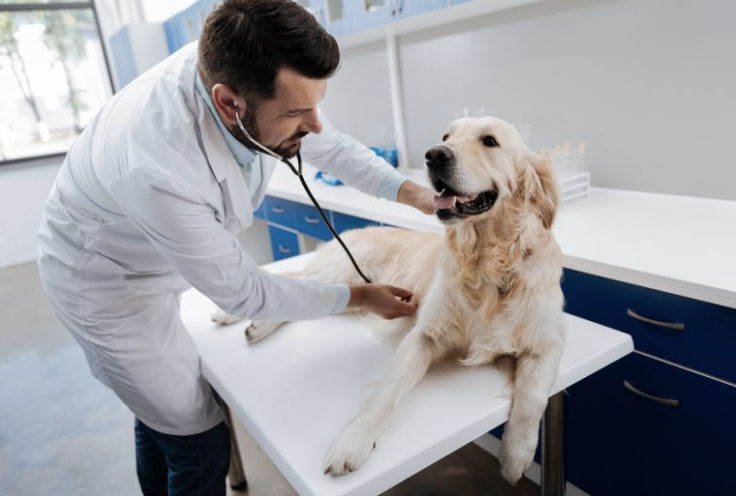
    Chemotherapy, antibody therapy and immunotherapy continue to provide hope for canine lymphoma.

    Everybody reading this article has likely had their life touched by cancer, either personally or through a friend, family member, or beloved pet. Cancer is something we all want to eradicate.

    While a complete cure may prove unachievable, making the disease more manageable is possible with the new technologies and advancements coming to the field of canine lymphoma.

    Why The Type Matters

    Canine lymphomas are a diverse group and among the most commonly diagnosed cancers in dogs. They collectively represent from 7 to 24 percent of all cancers diagnosed in dogs, according to the National Canine Cancer Foundation.

    More than 30 types of canine lymphoma have been described, and each can vary tremendously in its behavior. Some progress rapidly and are acutely life-threatening without treatment, while others advance slowly and are managed as chronic diseases.

    Lymphomas may affect any organ in the body, but they most commonly originate in lymph nodes before spreading to organs such as the spleen, liver, and bone marrow.

    >> READ FULL ARTICLE

  • How to Keep Pet Joint Pain at Bay

    How to Keep Pet Joint Pain at Bay

    What you need to know about prevention and management of pet joint pain, or osteoarthritis in cats and dogs.

    Owners often bring their pets to their veterinarian when they notice their companions are no longer as active as they once were. These dogs and cats often overweight by the time they present to their veterinarian. If the diagnosis is osteoarthritis, the goal is to prevent any ongoing discomfort for pets. Often, owners ask if there was anything that could have been done to prevent it.

    Certain breeds of dogs are predisposed to osteoarthritis (OA). Yet there are ways to help keep pet joint pain at bay and delay the onset of clinical signs in those breeds. Every veterinarian you ask about OA, regardless of specialty, will respond with the same no. 1 answer to preventing or delaying the onset of clinical symptoms of OA.

    “The most important part of preventing the clinical signs associated with osteoarthritis is weight management and maintaining an ideal body weight,” said Martha Cline, DVM, Dipl. ACVN, a board-
    certified veterinary nutritionist from Red Bank Veterinary Hospital in New Jersey.

    In studies, obese dogs with OA have shown noticeable improvement even with only a 6.10-8.85 percent reduction in body weight.

    Controlled activity is another way to prevent injury that leads to OA. Leash walks or jogging/trotting with pets help improve joint nutrition and assist in keeping the ligaments and cartilage healthy.

    “When joints are healthy, they are less likely to incur injury with explosive activity,” said Michael Conzemius, DVM, Ph.D., Dipl. ACVS of the University of Minnesota.

    Dietary supplements also have been shown to help maintain joint nutrition. Omega-3 fatty acids, such as EPA and DHA, help mediate the inflammatory response in joints.2 Glucosamine and chondroitin sulfate are commonly found in joint supplements for pets. It’s truly buyer beware with any of these products. Nutraceuticals such as joint supplements are not FDA-regulated, and more objective, randomized clinical trials that investigate the effect of specific components of these supplements need to be performed.

    >> READ FULL ARTICLE

  • The Latest on Veterinary Cardiology

    The Latest on Veterinary Cardiology

    How the advances in veterinary cardiology and canine medicine improve heart health for the lives of patients.

    Veterinary medicine has come a long way in recent years, especially in veterinary cardiology, where a large volume of research is underway.

    Researchers and specialists are making strides in interventional cardiology, which uses advanced procedures and imaging techniques to perform minimally invasive therapy with certain cardiac diseases. It can be used to correct abnormal rhythms or close openings in the heart.

    An example of the latter is called patent ductus arteriosus, or PDA. The condition results from failure of the ductus arteriosus to close after birth, resulting in an irregular flow of blood from the aorta to the main pulmonary artery.

    One minimally invasive treatment option utilizes the Amplatz Canine Duct Occulder, a device delivered via the vasculature by a catheter to the site of the PDA.

    Thaibinh Nguyenba, DVM, Dipl. ACVIM (cardiology), of MedVet Medical and Cancer Centers for Pets in Columbus, Ohio, was one of the technique’s lead researchers. He calls the Amplatz Canine Duct Occulder, or ACDO, a significant advancement in veterinary interventional cardiology.

    “[It] infuses novel biotechnology into a cardiovascular device designed specifically for dogs,” Dr. Nguyenba said. “With this device and procedure, patent ductus arteriosus occlusion success rates in dogs match those seen in similar procedures for people with the same disease.

    “Within a decade of its development, this minimally invasive procedure has become the treatment of choice for correcting patent ductus arteriosus in dogs,” he added.

    >> READ FULL ARTICLE