Category: Industry Insights

  • What FDA’s Latest Warning Letter Means for Animal Health Companies Using AI

    What FDA’s Latest Warning Letter Means for Animal Health Companies Using AI

    If you thought AI was something you could hand the wheel to and walk away – FDA just pulled over a company for exactly that.

    A warning letter issued April 2, 2026 to Purolea Cosmetics Lab lays out something regulated companies in every sector need to understand: AI can support compliance work, but it cannot own it. The letter describes a manufacturer that used AI agents to create drug product specifications, procedures, and master production and control records – and then failed to adequately review those documents to confirm they were accurate and actually compliant with CGMP requirements.

    FDA was direct in its response: if AI is used to help with CGMP activities going forward, any output or recommendation from an AI agent must be reviewed and cleared by an authorized human representative of the firm’s quality unit.

    That requirement isn’t a technicality. It’s a reminder of where accountability lives – and it’s not in the software.

    The Moment That Should Stop Every Regulated Leader Cold

    Perhaps the most striking detail in the letter involves process validation. During the inspection, FDA investigators informed the firm that process validation had not been completed before distribution – a legal requirement. The company’s response? They weren’t aware it was required because the AI agent they were using had never told them.

    Let that land for a moment.

    “The AI didn’t tell us” is not a quality system. It is not a compliance strategy. And it would not hold up in front of an inspector, a customer, a veterinarian, or a board of directors.

    In animal health, this matters in a particular way. Our industry runs on clinical trust. The professionals and companies in this space are held to standards by the FDA’s Center for Veterinary Medicine, the USDA, the veterinary community, and animal owners who make decisions based on what we tell them is safe and effective. The accountability structure doesn’t shift because AI helped draft the document.

    AI Is Leverage. It Is Not Leadership.

    None of this means animal health companies should avoid AI. The lesson here isn’t fear – it’s governance.

    AI can be genuinely useful for lean teams navigating complex regulatory environments. It can help organize information, create first drafts, summarize guidance documents, and reduce the administrative burden on technical and regulatory staff. That kind of support has real value, especially in an industry where qualified professionals are stretched thin.

    But there’s a difference between using AI to accelerate expert work and using AI to substitute for it.

    AI can draft a procedure. A qualified person must determine whether that procedure is scientifically sound, accurately reflects the process, and meets regulatory expectations for your specific products and claims. AI can summarize a regulation. A regulatory affairs professional must determine how that regulation applies to your pipeline, your label, your evidence package. AI can generate documentation. A quality unit must review, approve, and own it.

    Speed is one variable in regulated work. It is not the only one.

    The Real Risk Isn’t Using AI – It’s Using It Without Guardrails

    A well-governed AI process can help strong teams move faster. A poorly governed one can make weak systems look polished while the gaps underneath grow quietly larger.

    This is worth saying plainly for animal health companies that are actively integrating AI into marketing, regulatory submissions, technical service content, veterinary education materials, or product launch planning: the output may look complete before the thinking is sound. It may look compliant before a qualified human has verified it is. That is a different kind of risk than most teams are used to managing, because it doesn’t always look like a risk at first.

    The strongest organizations won’t be the ones using AI in the most places. They’ll be the ones who have thought clearly about where AI belongs, where it doesn’t, and who is responsible for every decision that reaches a customer, a clinician, or a regulator.

    The bot can help draft. The expert still has to sign off.

    Is Your Team Clear On Where The Line Is?

    If you’re using AI across regulatory, technical, marketing, or quality-adjacent workflows – now is a good time to map where human review is required and who owns the final output. Connect Veterinary Consulting helps animal health companies build communication and compliance strategies that are as rigorous as they are effective. Book a free consultation at the link below to talk through what this means for your team.
  • Artificial Intelligence in Veterinary Medicine

    Artificial Intelligence in Veterinary Medicine

    Whether you regard artificial intelligence (AI) as an existential threat to humanity or the foundation of a Brave New World of limitless progress and prosperity, there’s no doubt it’s here to stay. And despite recent bipartisan calls to regulate its development and applications, there’s a good chance it won’t be restrained for very long. 

    What does that mean for veterinarians? Should you worry that virtual veterinarian chatbots in the service of giant internet entities could soon replace you? Probably not. While AI programs capable of using and understanding everyday natural language already exist, in the near term these would likely be used to dispense the kind of advice already available to pet parents in print form on countless websites (Does my dog have arthritis? Why is my cat’s breath terrible?).  For veterinarians the technology may in fact be an opportunity to practice ultimate best medicine with the help of an electronic consultant of unfathomable knowledge and experience.

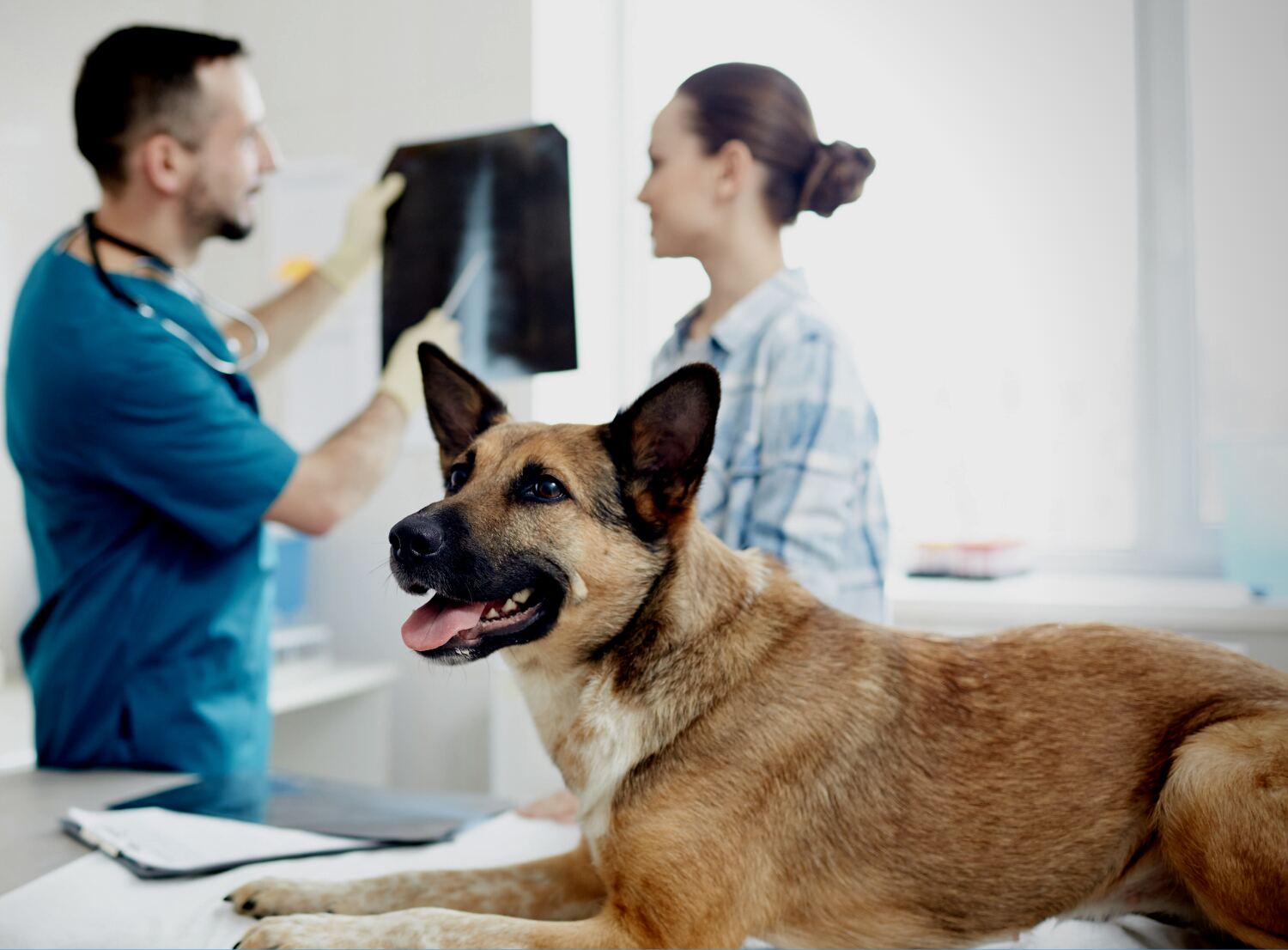
    But that won’t be the end of it. AI is already making inroads in radiology. Currently there are not enough radiologists to read the countless radiographs taken daily in general practice, which can result in delayed diagnoses and treatment. While AI hasn’t advanced far enough to take over the radiologist’s role (at least not yet) it’s already being used make the process of interpreting scans and films more efficient. AI programs trained on many thousands of radiographs and the interpretations associated with each can use these data to make diagnoses of their own when shown radiographs to which they had not previously been exposed. Exactly how AI comes to its diagnostic conclusions isn’t always obvious (indeed, the machine’s thought processes can be downright mysterious) but its findings are sufficiently accurate to serve as a first pass review to help speed the radiologist’s work. 

    AI’s technology has only scratched the surface on predicting diseases. AI algorithms can analyze data from electronic health records, including medical history, breed, age, and environmental factors, to predict the likelihood of an animal developing a particular disease. Many diseases have vague clinical signs and may go undetected for years. This includes Addison’s disease also called the “Great Pretender” because its signs that mimic those kidney and intestinal disease. Drs. Krystle Reagan, DVM, PhD, DACVIM (SAIM) and Chen Gilor, DVM, PhD, DACVIM (SAIM) teamed up with an electrical and computer engineer at UC Davis to develop an AI algorithm to diagnose Addison’s disease with an accuracy rate greater than 99 percent. The algorithm was based on bloodwork for more than 1,000 dogs previously treated at UC Davis.  

    For oncologists and internal medicine veterinarians, diagnosis is not the ultimate goal. Personalized medicine and treatment options are the focus. AI is currently being used to develop custom treatment plans by analyzing an animal’s medical history, genetics, and other factors to recommend the most effective care.  For example, Dr. Reagan’s research has shown that AI can help determine whether dialysis should be used as part of the treatment protocol for dogs diagnosed with leptospirosis.

    How will veterinary medicine be influenced by AI in the future?  ChatGBT can mimic speech surprisingly well today. AI in the future may be a sort of backup system to veterinarians in which telemedicine visits now can be triaged by an AI bot that determines a diagnosis and treatment plan and signed off by a human veterinarian thousands of miles away. You think we have Veterinary Client Patient Relationship (VCPR) issues now with telemedicine?

    Artificial Intelligence, however, is not without its faults. When someone tells an untruth, we call it lying. When AI does it, it’s a hallucination. Part of the issue here is that we don’t completely understand how AI does what it does. Its database is the public domain so how (or why) can it make up fake Kings or history that never occurred? When while we are waiting for that answer, there are ways to limit the hallucinations. One of the easiest ways is limiting possible outcomes by specifying the response you want i.e., giving the AI bumpers in bowling.

    AI has vast implications in veterinary medicine. AI can facilitate more comprehensive results in a shorter amount of time. Leveraging technology can also help the health of your practice too. Allowing technology to do what it is capable of allows you to diagnose disease earlier, make better treatment decisions, improve pet owner communication, and make that pet parent a client of your practice for their lifetime. Better science leads to better decisions, and better business. At least, it always has.

  • Pushing Past the 4D’s of Vet Med – Debt, Death, Demeaning Owners & Depression

    Pushing Past the 4D’s of Vet Med – Debt, Death, Demeaning Owners & Depression

    Too many stories today lack compassion. The world is frustrated, burnt out, too busy, too tired, too selfish to care. When you hear stories of veterinarians being berated by owners who had to wait 25 minutes to be seen because the doctor was too busy triaging a critical patient, you have to wonder what the world has come to.

    Veterinarians have not been taught how to handle interactions with owners that start out like this and emerge from them calm and intact. That’s a critical gap because they face the 4D’s every day – debt, unnecessary death, demeaning owners, and often depression. Top that off with threats of cyberbullying and the demands of trying to keep a business afloat and pressure can be overwhelming.

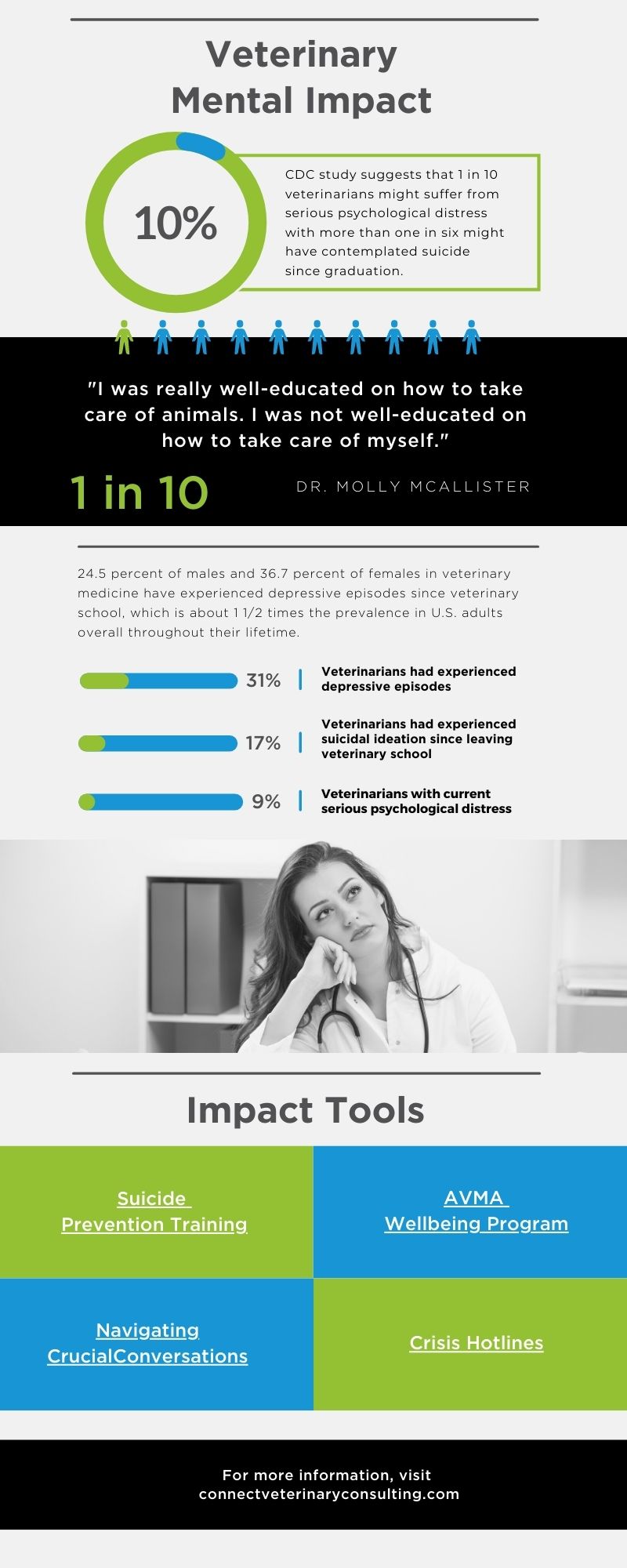
    A 2014 CDC study that surveyed more than 11,000 U.S. veterinarians in 2014 found that 9% had current serious psychological distress, 31% had experienced depressive episodes, and 17% had experienced suicidal ideation since leaving veterinary school.

    Having a greater online presence going into 2021 is expected, especially since the pandemic made it a non-option. Even more than that, though, patients expect a seamless digital experience. That means a functioning and well-run website, easily accessible online tools, and connecting patients to your practice digitally.

    It’s the last finding that is most disturbing – that more than one in six veterinarians has contemplated suicide since graduation. While experts debate the reasons that account for it-from the innate personality traits of those attracted to the profession, to the relentless demands placed on women practitioners — one thing is true: even one is too many.

     A powerful truism many veterinarians may never consider could potentially save lives or at least spare professional anguish: You can fire clients. Abuse is abuse. We don’t tolerate it in our daily business dealings or from the people we employ. And we needn’t tolerate abuse from our clients.  When disrespect, anger, and entitlement exact an emotional toll on you and your staff that cannot be endured, the relationship is over.  

    So how do we equip practicing and prospective veterinarians with skills to better care for themselves?  Groups such as “Not One More Vet” which currently has over 26 thousand members provide a safe space for veterinarians to gain support from colleagues for many of the profession’s challenges.

    Veterinary schools need to better prepare students for the emotional toll of euthanasia. The psychological toll of being “Dr. Death” is enormous and can leave veterinarians feeling isolated with no time to grieve or process the loss appropriately. Alternative solutions to euthanizing healthy animals must be developed. These include building a network of fosters and local shelters to which owners may surrender healthy animals.

    It is also time for companies in the animal health space to sponsor actionable programs to help veterinarians deal with the psychological stress that arises from running a business… Veterinarians need to understand price structure, competitive analysis, market tolerance, basic marketing, and financial skills to meet the daily challenges of practice.

    Download the infographic to learn more about current statistics and get valuable resources veterinarians and their staff can use to assist in these efforts.

    Click to Download (PDF)

    Help others in need by spreading the message and sharing it with your networks on social, #NOMV.

    If you or someone you know is in crisis:

    Connect with a Partner Who Knows the Industry

    After a challenging year, the value of having a partner who understands both the veterinary industry and how to help businesses flourish is even more valuable. For a business and marketing strategist who is deep-rooted in the medical industry, look no further than Connect Veterinary Consulting.

    Ready to take the next step with your marketing? We’re here to help. Get the conversation started today with a free consult.

  • What If Millennials Aren’t Lazy?

    What If Millennials Aren’t Lazy?

    [vc_row][vc_column][vc_column_text css=””]

    Confusion over that statement is most likely the stereotypical response if you aren’t included in the millennials. But what if that statement were true?

    Convenience, personalization, and instant response through technology are not just preferences for millennials. They are expectations. And frankly, society as a whole is moving in that direction. From online scheduling to text reminders, digital forms, automated follow-ups, and fast access to information, clients are increasingly used to managing their lives through convenient digital touchpoints.

    That means those of us in the healthcare profession, including veterinary medicine, have to be prepared to roll with the times – or risk having them steamroll right past us while we are still deciding whether to adapt.

    In the coming months and years, personalized veterinary medicine will become increasingly valuable to clients. Pet owners do not only want quality care. They want communication that feels timely, relevant, and tailored to their pet’s needs. They want to feel seen before, during, and after the appointment.

    Veterinarians need to maintain their position as the go-to information source in this digital age by meeting clients where they are. For many clients, especially millennials, that means providing information in accessible, convenient, and digitally friendly ways.

    Instead of looking at their digital communication strategy as something to be afraid of, veterinarians need to see it as another arm of their reach and their business to support consumers and their clients’ needs.

    Technology does not replace the veterinarian-client-patient relationship. When used well, it supports it.

    If you would like to have your business evaluated to increase personalization for your clients, let’s get started today. Simply book a consultation at the top of this page.


    [/vc_column_text][/vc_column][/vc_row]

  • Disruptor Mentality – a Perception Shift

    Disruptor Mentality – a Perception Shift

  • Adding Value: Over-Used Catch Phrase in Animal Health?

    Adding Value: Over-Used Catch Phrase in Animal Health?

    [vc_row css=”.vc_custom_1544543794999{padding-top: 20px !important;}”][vc_column][vc_column_text]In the corporate world, it’s all about adding value and synergies. But how can we turn those buzzwords into practical value for our customers?

    Let’s face it, in the companion animal pharmaceutical industry; there have been very few novel therapeutics launched in recent years. While we can all debate the reasons for that previous statement, let’s look beyond industry product offerings. Animal health manufacturers face stiffer and stiffer competition from competitors, especially in parasitology, biologicals, and nutraceuticals. Instead of converting one clinic away from our competition, what if we enhanced our relationships with those veterinary clinic owners?

    Most veterinarians need to increase revenue and in their clinics. So why don’t we as an industry do a better job of helping them do just that? But, unfortunately, our product offerings only do that in part.

    How about sitting down with the veterinarian as the business owner and not a medical director to identify the gaps they find in their revenue streams and identify solutions? The best answers enhance vet-client relationships and keep the client returning to the clinic regularly.

    Finding a win-win solution for the veterinarian and the company deepens the relationship between sales representatives that call on the clinic and the clinic owner – adding value to both sides of the equation.[/vc_column_text][/vc_column][/vc_row]